Step onto the damp grass of the garden on a mid-July morning. The air hangs thick with the sharp, peppery scent of wet foliage, and the soil feels cool underfoot. You look at your tomato plants, standing proud against their bamboo canes. The natural instinct is to fiercely protect every single leaf, watching the wild, rambling greenery expand as a sign of success. But as the summer damp settles into the soil, that lush green canopy becomes a quiet liability.
For years, the prevailing wisdom felt obvious: a bigger, bushier plant naturally equates to a heavier harvest. It makes sense on the surface, treating every leaf as a vital solar panel to catch the weak British sun. Yet, when you crouch down and inspect the base of the stem, you notice the lowest leaves drooping, physically brushing against the damp earth.
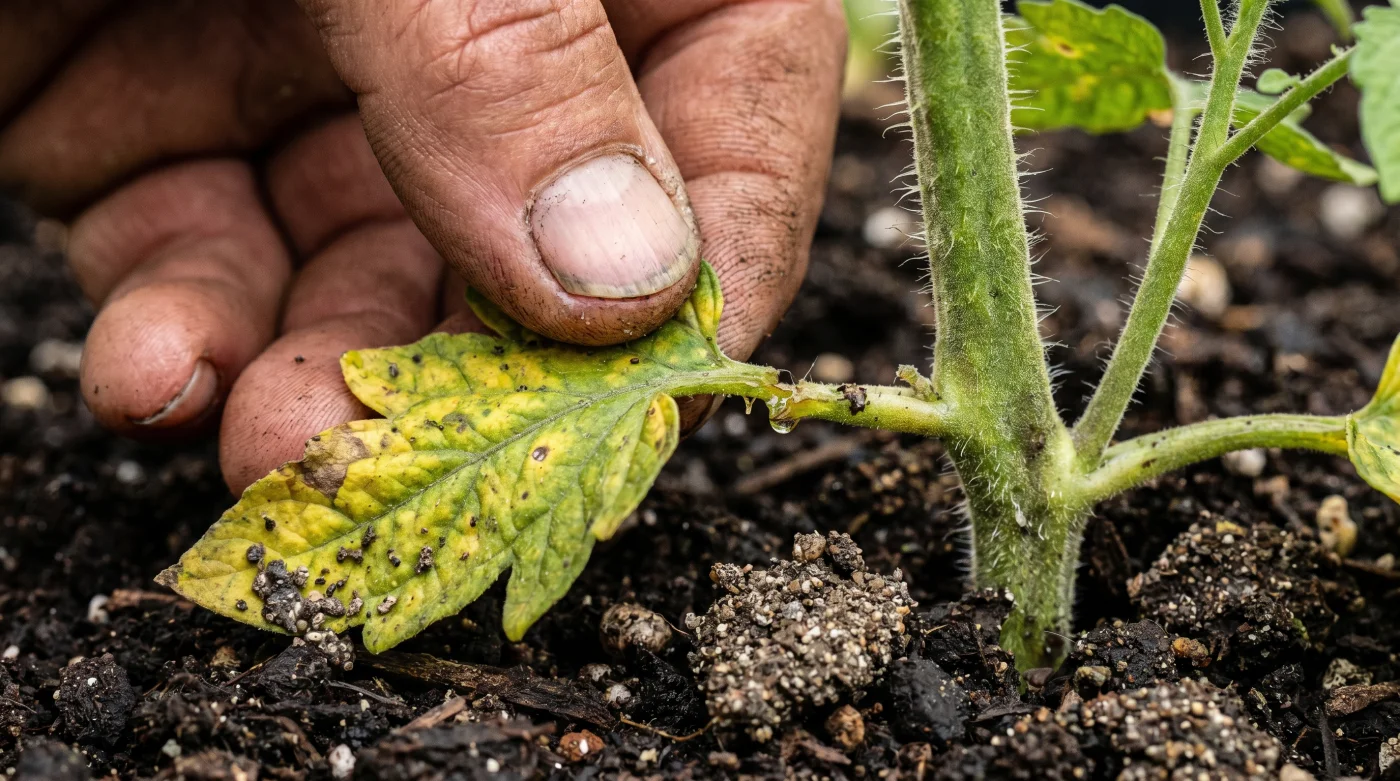
This is exactly where the quiet heartbreak of fungal disease begins. The moment wet compost splashes onto those bottom leaves during a rain shower, invisible spores take hold. Instead of feeding the swelling fruit above, the plant wastes precious energy trying to sustain shaded, dying foliage that contributes nothing to the final crop.
Sometimes, the most effective physical adjustment feels entirely counterintuitive. Taking a sharp blade and snapping away healthy-looking green growth directly contradicts the nurturing impulse. But this one tactile modification alters the entire physical structure of the plant, forcing a complete redirection of its internal resources.
The Architecture of Intentional Pruning
Think of your tomato plant as a water tower under pressure. When the bottom valves are left wide open, the pressure never quite reaches the very top where the premium fruit sits. Those lower leaves, shaded by the canopy above, are no longer producing energy through photosynthesis. They have become metabolic drains, hanging on merely out of habit. By removing them and closing those obsolete valves, you stop the plant from treating the damp soil as a companion, turning a messy bush into a highly efficient, vertical column of upward energy.
Ask Arthur Pendelton, a 68-year-old allotment veteran who has spent four decades mastering the unpredictable Yorkshire summer. Arthur never boasts about the size of his tomato bushes; he points only to the heavy, crimson clusters hanging from bare, calloused stems. He strips the bottom thirty centimetres completely bare the moment the lowest truss of tomatoes begins to swell. ‘You have to treat the bottom of the stem like a bare ankle wading through a puddle,’ he explains, flicking a stray yellow leaf into his compost trug. ‘If it touches the wet mud, the whole body catches a chill.’
Adapting the Cut to Your Growing Environment
Not all environments demand the exact same severity of pruning. You must read the space strictly before making a cut. The air circulation in a cramped suburban garden behaves very differently from an open, breezy coastal plot.
- Councils announce immediate pause on ULEZ expansion following severe system failure
- The 60-second salt scrub trick that restores a rusted cast iron pan to factory condition
- Mechanics reveal the 10-second check that guarantees your car fails its MOT
- The 80-20 charging rule that makes your smartphone battery last for a decade
- FCA introduces strict new rules banning major banks from blocking crypto transfers
- Top chefs never keep olive oil next to the cooker-here is why it ruins your food
- Dermatologists over 50 use this damp-skin trick to double retinol absorption overnight
- Why upgrading your front door lock could secretly void your home insurance policy
- The five-minute washing machine fix that completely stops damp-smelling clothes
For the Glasshouse Purist
Indoors, the air is notoriously still and heavy with humidity, creating a perfect incubator for grey mould. Here, stripping the lower third is absolutely critical for survival. You need to create a clear wind tunnel across the surface of the soil, ensuring that when you water the pots, the evaporation disperses quickly rather than settling under a dense skirt of trapped foliage.
For the Patio Pot Gardener
Growing in tight containers means root space is severely limited, making nutrient distribution a zero-sum game. Every ounce of liquid feed you provide needs to reach the swelling fruit. Removing the bottom foliage prevents the plant from spending costly potassium on maintaining leaves that are only inches away from the baking concrete of your patio.
Mindful Application: Making the Cut
Executing this tactile modification requires a slow, deliberate hand. You are intentionally creating a wound on the main stem, so hygiene and precision take priority over speed. Do not tear the leaves downward, as this strips the outer skin from the stalk and invites immediate infection.
- Wait for a dry, sunny morning to ensure the wound scars over quickly before nightfall.
- Locate the lowest truss of swelling green tomatoes on the stem.
- Identify all foliage sitting beneath this specific fruiting branch.
- Using sterilised secateurs, snip the leaf stem flush against the main stalk.
- Remove the discarded foliage from the area completely to prevent decaying matter near the roots.
The Tactical Toolkit: Keep a jar of surgical spirit handy to wipe your secateurs between different plants. Aim to clear exactly 20 to 30 centimetres of bare stem measured from the soil line. Limit your pruning to a maximum of three leaves per week to avoid sending the plant into systemic shock.
The Broader Perspective on Growth
Stripping back a plant to improve its yield forces a beautiful reconsideration of how we measure success. We are socially conditioned to view addition as the only path to improvement. More leaves, more branches, more effort. Yet, standing in the garden with sap on your fingers, you realise that clarity often comes from subtraction.
Removing what no longer serves a purpose allows the truly important elements to thrive. By denying the plant its messy, earthbound foliage, you give it the airflow and focus needed to produce a heavier, sweeter harvest. It is a quiet reminder that sometimes, the most nurturing thing you can do is sever the ties that drag you down to the damp earth.
‘A tomato plant should never wear a skirt; keep its ankles bare, the soil clear, and the energy moving strictly upwards.’
| Key Action | Physical Detail | Added Value for the Reader |
|---|---|---|
| Leaving Lower Foliage | Leaves sit heavily on damp compost, blocking wind. | Constant anxiety over soil-borne blight and wasted liquid feed. |
| Gradual Stripping | Removing two leaves a week below the lowest fruit. | Doubles the fruiting yield without shocking the root system. |
| Sterilising Tools | Wiping blades with spirit between separate plants. | Ensures viral pathogens are not manually spread across your crop. |
Essential Clarifications
When exactly should I start removing the bottom leaves? Begin this process only after the first cluster of flowers has successfully set into tiny, pea-sized green tomatoes.
Will snapping the leaves by hand damage the plant? Yes, pulling downward can tear the delicate epidermal layer of the main stem. Always use sharp, clean secateurs to make a flush cut.
Can I compost the leaves I have just removed? Only if they are entirely green and free from any brown spotting. If you suspect any fungal presence, burn them or put them in the council waste.
Does this rule apply to bush-type tomatoes? No, this tactile modification is strictly for indeterminate, vining cordon varieties that grow tall on a single main stem.
How far up the stem should I eventually prune? You should aim to keep the main stem entirely bare below the lowest ripening truss of fruit, moving upwards as the harvest progresses.