The waiting room of a local testing station usually smells of stale instant coffee and damp floor mats. You sit in a hard plastic chair, listening to the rhythmic hammering of an air gun echoing from the service bay, waiting for the verdict. Your mind inevitably drifts to the expensive noises: that faint metallic rattle at fifty miles per hour, or the slight hesitation when you turn the key on a freezing January morning.
You brace yourself for a mechanic to emerge holding a clipboard, ready to explain how your catalytic converter has quietly given up the ghost. We condition ourselves to anticipate catastrophic mechanical failures, assuming the annual inspection is primarily designed to catch crumbling suspension components and weeping head gaskets.
It is completely natural to worry about the unseen organs of your vehicle. The engine block and the gearbox are mysterious, heavy things, wrapped in greasy metal and complicated wiring looms.
Yet, thousands of cars roll off the ramp every week with a red refusal certificate for reasons that have absolutely nothing to do with complex engineering. The truth is often a frustratingly mundane oversight, a tiny detail you could have fixed on your own driveway for less than the price of a pint.
The Illusion of the Complex Fault
You might think of a car failure like a heart attack, a sudden breakdown of a vital system. In reality, the testing process operates more like strict border control bureaucracy. The inspector is not grading the overall soul of your vehicle; they are working through a rigid checklist where every box carries equal weight.
A grand stone archway can stand for centuries, but it will collapse if someone removes a single wooden peg from the scaffolding. The testing matrix treats the smallest visual obstruction with the exact same binary severity as a rusted brake pipe.
Consider David, a fifty-two-year-old tester who runs a damp, drafty garage just off the ring road in Sheffield. He sighs heavily whenever he climbs into a perfectly sound, beautifully maintained estate car, pulls the wiper stalk, and hears only the dry, rasping scrape of rubber against dirty glass.
“It breaks my heart every time,” David notes, wiping oily hands on a rag. He explains that failing a perfectly safe family car over an empty plastic fluid reservoir is the most irritating part of his week, a completely avoidable bureaucratic nightmare that costs his customers both time and money.
Identifying the Silent Saboteurs
This is where the concept of the success killer comes into play. These are the blindingly obvious details that we become completely blind to through daily familiarity. You stop noticing the smear on the glass or the warning light on the dash because they simply become part of your morning commute.
By segmenting these overlooked areas, you can take control of the outcome before you even book the appointment. Mastering the visual margins transforms you from an anxious waiting-room victim into a prepared, confident owner.
The Empty Vessel (For the Time-Poor Commuter)
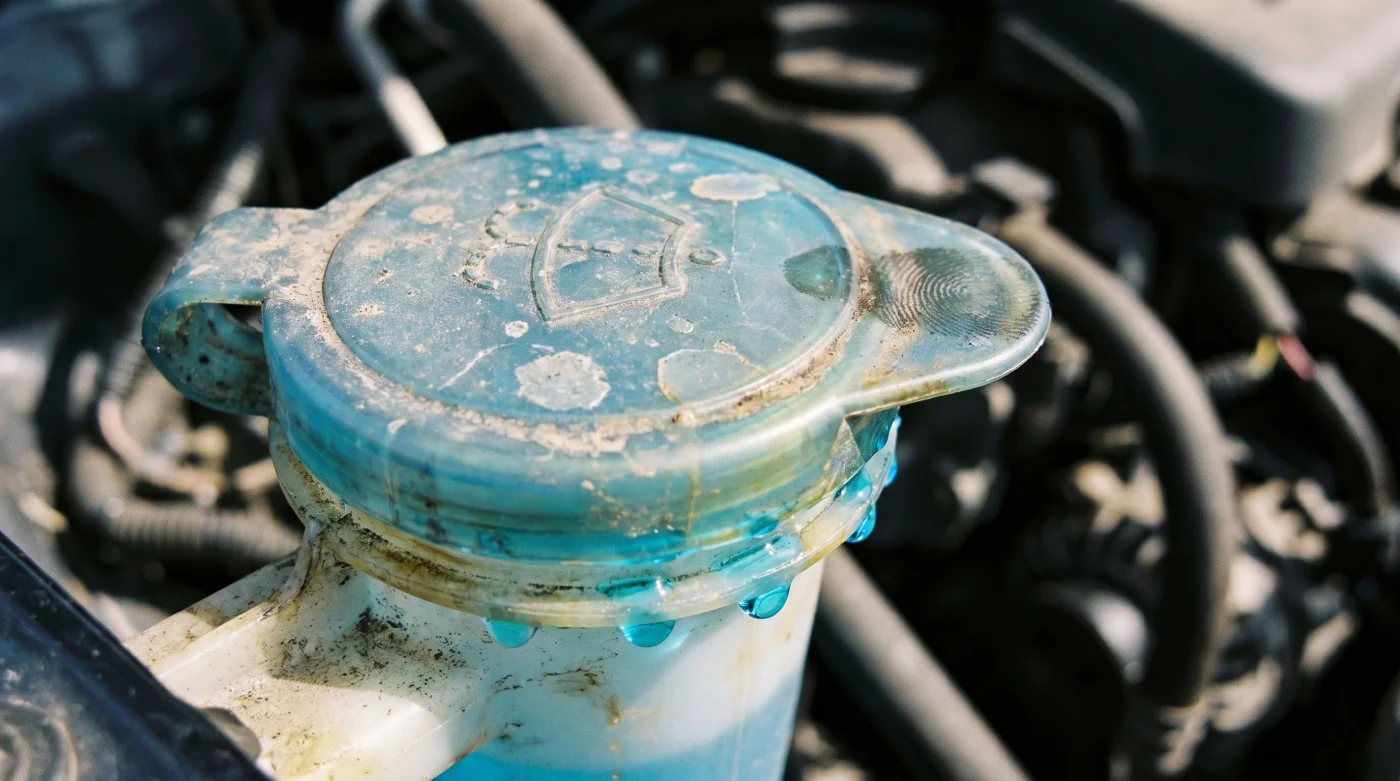
The single most common preventable failure point is a lack of screenwash. It sounds almost comical, but a dry system means you cannot clear the glass to ensure a safe view of the road.
- The 80-20 charging rule that makes your smartphone battery last for a decade
- FCA introduces strict new rules banning major banks from blocking crypto transfers
- Top chefs never keep olive oil next to the cooker-here is why it ruins your food
- Dermatologists over 50 use this damp-skin trick to double retinol absorption overnight
- Why upgrading your front door lock could secretly void your home insurance policy
- The five-minute washing machine fix that completely stops damp-smelling clothes
Water alone is not enough, especially in the bitter depths of a British winter. You need a properly mixed winter formula to prevent the reservoir and tiny jet nozzles from freezing solid the moment the temperature drops below zero.
The Cluttered Horizon (For the Tech-Reliant Driver)
We live in an era of dashboard accessories. Phone mounts, suction-cup navigation screens, and dangling air fresheners hanging from the rear-view mirror feel like harmless personal touches.
However, the testing regulations are fiercely strict regarding the swept area of the windscreen. Anything that intrudes into the driver’s direct sightline will result in an immediate refusal, regardless of how cleanly your engine runs.
The Hidden Filaments (For the Night Driver)
You notice immediately if a main headlight bulb blows, because the road ahead goes dark. But how often do you walk around to the rear of your car in the dark to check the smaller, quieter lights?
A blown number plate bulb or a dead rear fog light is a guaranteed failure. Replacing these requires only a few spare minutes and a bulb that usually costs less than three pounds from an auto parts shop.
The Ten-Second Forecourt Ritual
Preventative action does not require you to own a trolley jack or a set of socket wrenches. It simply requires a mindful pause before you hand over the keys. Think of it as a pre-flight check, breathing calm into the process rather than rushing blindly into the bay.
You can execute this entire sequence in the shadow of the test centre just moments before walking into the reception area.
- Pop the bonnet and locate the cap featuring the windscreen wiper symbol—usually bright blue or yellow.
- Fill it to the brim with a pre-mixed, cold-weather fluid.
- Pull down all phone mounts, sticky pads, and hanging ornaments, throwing them into the glovebox.
- Turn on the ignition, switch on the headlights, hazards, and fog lights, then walk a slow lap around the exterior.
- Run your thumb gently along the edge of the wiper blades to check for tearing or hardened rubber.
These simple, tactile movements ground you. They shift your relationship with the car from passive passenger to active custodian.
Taking responsibility for the superficial elements means you eliminate the bureaucratic variables, leaving the mechanic to focus only on the genuine mechanical safety of the machine.
Beyond the Pass Certificate
Ultimately, keeping the washer fluid topped up and the dashboard clear is not really about passing an annual government inspection. It is about the reality of driving on a damp, salty stretch of the M1 in fading November daylight.
When the gritters have been out and the spray from an articulated lorry suddenly coats your view in opaque brown sludge, a fully functioning wash system becomes your primary line of defence.
The piece of paper you receive at the end of the day is just a byproduct of good habits. True peace of mind comes from knowing that your vision is clear, your lights are bright, and you are entirely prepared for whatever the road throws your way.
“The best maintained engine in the world counts for nothing if you cannot see through the windscreen safely.” — David, MOT Tester
| Key Point | Detail | Added Value for the Reader |
|---|---|---|
| Washer Fluid | Must emit enough fluid to clear the glass. | Saves you a re-test fee for a 10-second top-up. |
| Windscreen Clutter | Remove items from the swept wiper area. | Prevents instant failure over a £5 phone holder. |
| Minor Bulbs | Check number plate and fog lights. | Avoids paying garage markups on basic bulbs. |
Frequently Asked Questions
Can I fail for an empty washer bottle even if my wipers are brand new?
Yes. If the wipers cannot clear the screen using the internal jet system, it is an immediate refusal, regardless of blade condition.Does an air freshener really matter to the inspector?
If it hangs down far enough to obstruct a specific zone of your forward vision, the tester is legally required to mark it as a fault.What is the best fluid to use in winter?
Always choose a pre-mixed or concentrated winter screenwash that is rated for sub-zero temperatures. Plain water freezes and splits the internal plastic pipes.Will a tester top up the fluid for me?
Some friendly mechanics might, but they are under no obligation to do so once the test has formally begun on the computer system.Do I have to pay again if I fail on something this small?
Usually, you can get a free partial retest if the vehicle stays at the testing station and the fault is fixed by the end of the next working day, but it is much easier to avoid the stress entirely.