Imagine the crisp bite of a Tuesday morning. Frost clinging to the windscreen, the rhythmic ticking of the indicator echoing in the quiet cabin as you wait at the roundabout. For months, the ambient anxiety of driving an older diesel has sat heavy in the passenger seat. The flash of an enforcement camera overhead usually feels as natural as the sunrise—a silent, expensive certainty of modern motoring.
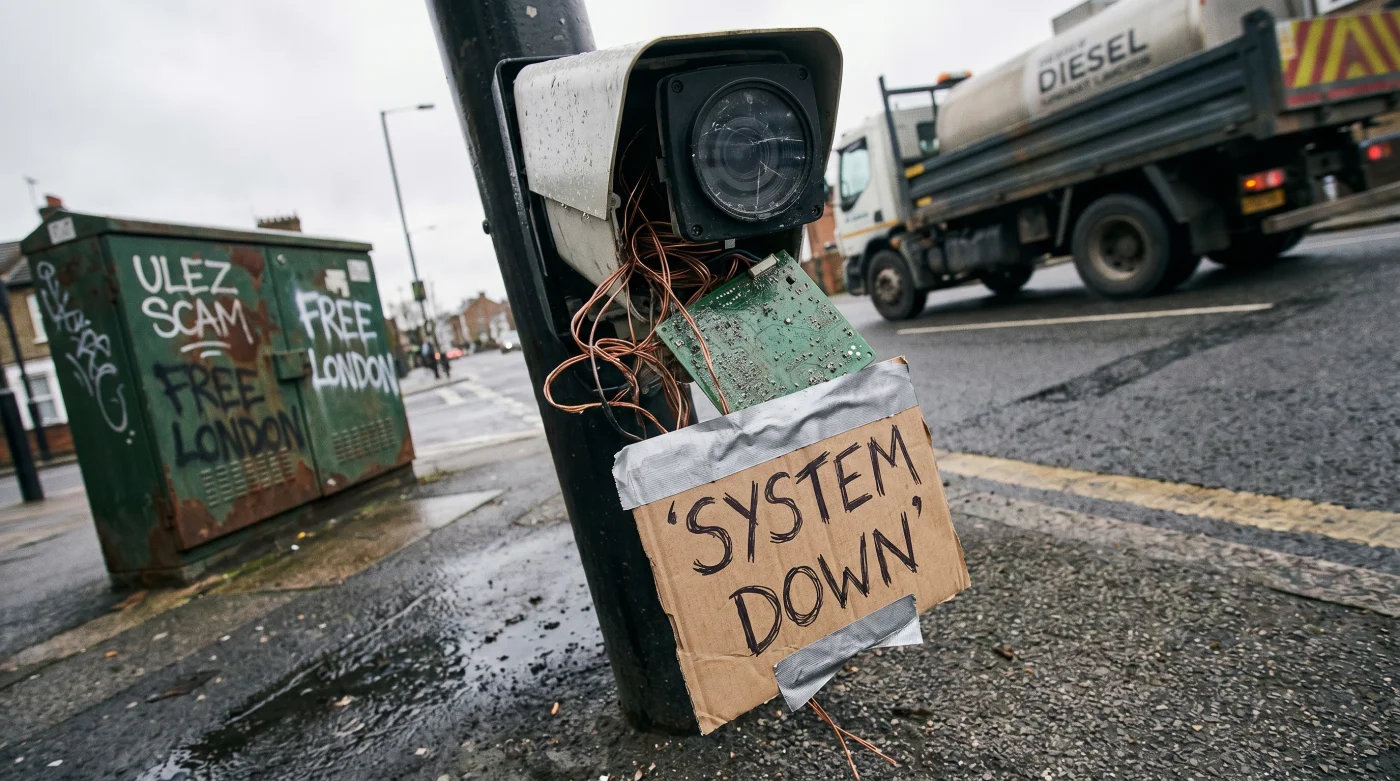
But this morning, the cameras are sleeping. A sudden, subtle tremor has ripped through the local authority networks, halting a machine we were repeatedly told could never be stopped.
The assumption has always been that the Ultra Low Emission Zone rollout is a force of nature. An ever-expanding ring of green borders and daily charges stretching relentlessly across the Home Counties and regional hubs. We accepted the surveillance as an airtight, flawless operation built on impenetrable data.
We now know the digital perimeter was fragile. A severe system failure—a critical data breach deep within the enforcement camera network—has forced councils into an immediate, embarrassing retreat. The expansion is entirely frozen, contradicting the entire narrative of an inevitable nationwide grid.
The Illusion of the Iron Grid
We tend to view civic infrastructure like a concrete dam—solid, monolithic, and permanent. When a local authority announces a new emissions boundary, you are expected to see it as an impenetrable wall designed to tax non-compliance without fail or friction.
Yet, the reality is closer to a delicate nervous system. The enforcement network relies on millions of microscopic, constant data handshakes. Number plate recognition, database cross-referencing, and automated penalty generation must happen seamlessly in a fraction of a second. If one synapse misfires, the logic of the entire grid falls apart.
When that system works, it feels omnipotent. When a data breach compromises the integrity of those handshakes, the facade drops. This sudden pause isn’t a political act of mercy; it is a desperate attempt to patch a bleeding artery before thousands of drivers are falsely penalised or sensitive telemetry leaks into the open web.
This suspension completely rewrites your driving timeline. The desperate rush to sell a reliable older estate car for a premium compliant model just lost its immediate, crushing urgency.
Consider the reality inside the municipal control rooms. Marcus Thorne, a 54-year-old network security architect contracted by regional transport authorities, watched the anomaly unfold last week. ‘We noticed irregular data spikes polling from the perimeter cameras,’ he noted privately. ‘It wasn’t a standard software glitch; it was a systemic vulnerability exposing driver locations and registration data. We had to pull the plug.’ Marcus spent forty-eight hours staring at cascading error logs, eventually forcing the hands of the local councillors. This wasn’t a policy pivot. It was a digital triage.
Mapping Your Immediate Position
The fallout of this structural breach does not affect everyone equally. Depending on how you use your vehicle, this temporary reprieve demands a highly specific reaction to protect your finances and your peace of mind.
For the Daily Commuter
If you rely on your car to cross the newly proposed boundary lines for the morning run, this pause offers a crucial financial breather. You do not need to alter your route or worry about daily digital logging. Keep your current routine intact, but remain observant of local council updates.
- The 60-second salt scrub trick that restores a rusted cast iron pan to factory condition
- Mechanics reveal the 10-second check that guarantees your car fails its MOT
- The 80-20 charging rule that makes your smartphone battery last for a decade
- FCA introduces strict new rules banning major banks from blocking crypto transfers
- Top chefs never keep olive oil next to the cooker-here is why it ruins your food
- Dermatologists over 50 use this damp-skin trick to double retinol absorption overnight
- Why upgrading your front door lock could secretly void your home insurance policy
- The five-minute washing machine fix that completely stops damp-smelling clothes
For the Independent Tradesperson
The pressure to replace a beloved transit van has been a crushing weight for small businesses and sole traders. Right now, hold your capital. Do not sign a high-interest finance agreement on a compliant commercial vehicle while the enforcement network is in pieces. The system’s failure buys you vital weeks to find a better deal without the artificial deadline threatening your livelihood.
For the Weekend Driver
Perhaps you only drive to visit family on Sunday afternoons. Your risk was always lower, but the administrative headache of paying ad-hoc charges was looming. For now, that burden has vanished. Drive your familiar roads normally.
Navigating the Grey Area
While the expansion is paused, older, established zones may still be operating on legacy systems that remain uncompromised. You need to handle this transition with precision rather than broad assumptions.
Take a quiet moment to audit your vehicle’s status without the background panic. Treat this as a grace period to get your paperwork in order, rather than an excuse to ignore the shifting landscape entirely.
Here is your tactical toolkit for the coming weeks:
- Verify local borders: Check your specific council’s portal. Do not rely on national news for street-level enforcement boundaries.
- Document your mileage: Keep a physical logbook in the glovebox. If the system incorrectly issues a penalty from a compromised camera, your manual log is your strongest defence.
- Halt panic sales: If you listed a non-compliant car below market value out of desperation, pull the advert. The market just shifted slightly back in your favour.
- Monitor the breach: Watch the post for official letters regarding your personal data. If the camera network leaked registration details, you must be hyper-aware of phishing scams posing as penalty notices.
Finding Stability in the Static
We spend so much of our lives reacting to the invisible rules built around us. The expansion of these emission zones felt like a tightening loop, dictating how we move, what we buy, and how much we are permitted to participate in the rhythm of our own towns.
Seeing the machinery break returns a sense of scale to the situation. It reminds you that the systems governing your daily drive are built by humans, prone to critical error, and entirely capable of being halted when they fail.
There is a quiet, powerful relief in this regional suspension. It is not just about saving twelve pounds a day. It is about the sudden, undeniable proof that the digital rollout is not infallible. You have been given the rarest of gifts in modern municipal planning: time. Use it to breathe, reassess your options, and drive your familiar routes with the window rolled down, knowing the cameras above are nothing more than silent, sleeping glass.
‘A paused system is a vulnerable system; until the data leak is plugged, the safest place for your vehicle data is entirely off their radar.’
| Driver Profile | Immediate Action | Added Value |
|---|---|---|
| Sole Trader | Pause new van purchases | Protects cash flow from high-interest loans |
| Commuter | Maintain normal routes | Saves daily compliance fees temporarily |
| Seller | Remove panic-priced adverts | Prevents severe capital depreciation |
Frequently Asked Questions
Are all cameras currently turned off?
No. While the expansion borders are paused due to the data breach, older legacy zones in central districts may still be operational on separate servers. Always verify locally.
Will I be fined if I drive through the new expansion area today?
During the official suspension period, councils cannot legally enforce the charge using compromised infrastructure. However, you must document your travel in case of automated errors.
Is my personal data at risk?
If you have recently triggered a camera in the affected regions, your telemetry data may have been exposed. Be vigilant for fraudulent text messages demanding payment.
How long will this pause last?
System engineers require an indefinite period to secure the network. It could range from a few weeks to several months, depending on the severity of the vulnerability.
Should I still buy a compliant car?
Yes, but at your own pace. The goal remains the same, but the artificial timeline forcing you into a bad financial decision has been lifted.