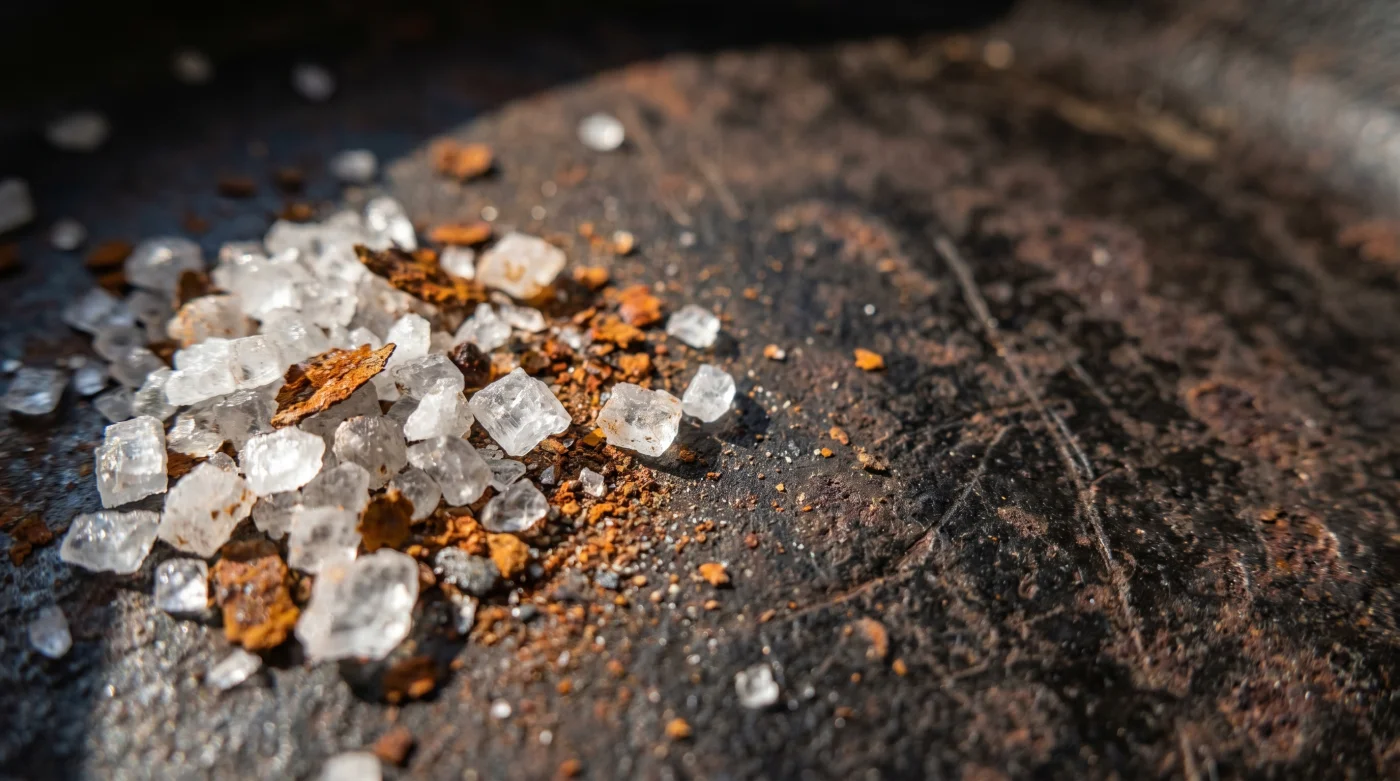
Picture a damp Tuesday morning in November. You reach to the very back of the corner cupboard, past the gleaming stainless steel and the ceramic plates, your fingers brushing against cold, heavy iron. Pulling it into the weak kitchen light, you see the unmistakable bloom of burnt-orange oxidation. A forgotten skillet, neglected after a Sunday roast, now looking like an archaeological artefact retrieved from a shipwreck.
Panic usually sets in right about now. The standard reaction involves furious scrubbing with wire wool, soaking in caustic chemicals, or quietly sliding the heavy pan into the recycling bin. We fear the rust, treating it like a terminal disease that has eaten through the very soul of the cookware, rendering it unsafe and unsalvageable.
But professional kitchen porters and seasoned cooks view this entirely differently. That terrifying layer of rust is merely a surface reaction, a temporary crust sitting atop decades of potential. You do not need sandblasting equipment, and you certainly do not need to fill your kitchen with the fumes of industrial rust removers to bring it back to life.
The secret to returning this heavy block of metal to its factory-smooth glory requires exactly one minute. It demands nothing more than a handful of something you already keep by the cooker. Coarse sea salt changes everything, transforming a daunting restoration project into a brief, oddly satisfying ritual that relies on physics rather than harsh chemistry.
The Anatomy of Surface Oxidation
Cast iron is incredibly porous. When stripped of its protective baked-on oil, moisture from the damp British air settles into those microscopic craters, reacting with the iron. You might look at the orange flakes and imagine the metal crumbling away to nothing, but this is a trick of the light. The oxidation is sitting entirely on the surface, much like a thick frost clinging to a window pane. It hasn’t ruined the glass; it just needs scraping away gently.
This is where the magic of coarse sea salt comes into play. Unlike harsh chemical sprays that strip the iron bare and leave toxic residues, salt acts as an abrasive, thirsty sponge. As you grind the crystalline edges against the metal, the salt binds to the oxidised particles, shearing them away without scratching the porous iron beneath. It captures the rust, holding it in a dry suspension so it can be easily wiped away.
Arthur Pendelton, a 62-year-old head chef at a bustling Yorkshire pub, handles dozens of cast iron skillets a week. During a particularly frantic Friday service, a junior cook left three pans soaking in the sink overnight—a cardinal sin in any kitchen. When Arthur found them the next morning, bright orange and crying out for rescue, he didn’t shout. He simply poured half a bag of cheap, coarse sea salt into the dry pans, grabbed a halved potato, and scrubbed in tight, firm circles. “Salt respects the metal,” he explained, wiping away a grey, rust-filled paste to reveal clean iron just sixty seconds later. “Chemicals panic the iron. Salt just takes away what shouldn’t be there.”
Tailoring the Abrasive Approach
Not all rust scenarios are created equal. Depending on how long your pan has been lingering in the damp, you might need to adjust your friction strategy to match the severity of the neglect, ensuring you do not waste energy on a problem that requires finesse.
- Mechanics reveal the 10-second check that guarantees your car fails its MOT
- The 80-20 charging rule that makes your smartphone battery last for a decade
- FCA introduces strict new rules banning major banks from blocking crypto transfers
- Top chefs never keep olive oil next to the cooker-here is why it ruins your food
- Dermatologists over 50 use this damp-skin trick to double retinol absorption overnight
- Why upgrading your front door lock could secretly void your home insurance policy
- The five-minute washing machine fix that completely stops damp-smelling clothes
For the Light Bloom (The Weekend Forgetter)
If you simply left the pan wet on the draining board overnight and woke up to a faint orange dust, you only need dry friction. A generous handful of coarse salt rubbed into the dry metal with a piece of thick kitchen roll will buff the surface clean in seconds. The salt acts like a dry eraser on a chalkboard, leaving pristine iron behind.
For the Deep Crust (The Shed Discovery)
Finding a skillet that has survived three winters in a damp garage requires a slightly wetter approach. Adding a splash of neutral oil—like rapeseed or sunflower—turns the salt into a heavy abrasive paste. The oil prevents the newly exposed iron from immediately reacting with the air while the salt aggressively grinds away the stubborn, flaky rust. The thick slurry creates an airtight seal as you work.
For the Ridged Grill Pan
Those parallel lines are a nightmare for standard sponges. Instead of fighting the geometry, pour the salt generously between the ridges and use a stiff-bristled wooden brush. The salt crystals tumble into the narrow valleys, acting like thousands of tiny chisels doing the hard work for you, reaching into corners where human fingers simply cannot press.
The Sixty-Second Salt Ritual
Restoring your skillet is not a test of strength. It is a matter of consistent, deliberate pressure. Gather your materials before you begin, creating a small, focused workspace next to the sink to contain the grey dust.
- Ensure the pan is completely dry. Any residual water will dissolve the salt, ruining the abrasive effect immediately.
- Pour four tablespoons of coarse sea salt directly into the centre of the rusted pan.
- Take a thick pad of kitchen paper, or the flat side of a halved potato, and begin rubbing the salt in concentric circles.
- Watch as the bright white crystals slowly turn a muddy, rusty grey. This is the visual cue that the oxidation is lifting.
Once the salt has absorbed all the loose rust, simply tip the grey waste into the bin. Do not use water to rinse the pan at this stage. Instead, wipe away the remaining dust with a clean, dry cloth, leaving the raw iron exposed and ready for a protective coating.
- The Tactical Toolkit:
- Abrasive: 4 tablespoons of coarse sea salt (table salt is too fine).
- Friction applicator: A halved potato (its natural moisture helps bind the dust) or a thick cloth.
- Protective seal: 1 teaspoon of rapeseed oil for the immediate aftermath.
The Quiet Confidence of Repair
There is a distinct, grounding satisfaction in bringing a solid piece of kitchen equipment back from the brink. In a culture built on replacing things the moment they show signs of wear, taking sixty seconds to revive cold, heavy iron feels genuinely rebellious. It is a quiet act of preservation in a disposable world.
You realise that some materials are naturally forgiving. The pan was never ruined; it was simply waiting for you to understand its nature. By skipping the aggressive chemicals and using a simple pantry staple, you are not just saving money. You are building a tactile relationship with the tools that feed you, learning to read the metal and respond with exactly what it needs.
Every time you cook a steak or bake a cornbread in that skillet, you will remember the morning you rescued it from the scrap heap. The smooth, blackened surface becomes a record of your own resilience, a daily reminder that very few mistakes in the kitchen are truly permanent. You are the custodian of the iron, and you now know exactly how to care for it.
“Cast iron is essentially immortal; treat the rust as a passing season, not a final verdict.”
| Key Point | Detail | Added Value for the Reader |
|---|---|---|
| Abrasive Agent | Coarse Sea Salt | Costs pennies and prevents toxic chemical residue from leaching into your food. |
| Application Tool | Halved Potato or Dry Cloth | Protects your hands while delivering even, flat pressure across the porous iron surface. |
| Immediate Aftercare | Thin layer of Rapeseed Oil | Instantly seals the newly exposed, raw metal against airborne moisture to stop flash-rusting. |
Frequently Asked Questions
Can I use standard table salt for this?
No, table salt dissolves far too quickly and lacks the sharp, crystalline edges required to grind away the stubborn oxidation.Should I wet the pan first to help the scrubbing?
Keep the pan bone dry. Adding water will melt your salt and instantly encourage flash-rusting on the newly exposed raw iron.What if the rust has pitted the metal deeply?
Surface salt scrubbing removes the active rust. If deep craters remain, the pan is perfectly safe to use, but will require several layers of oven-seasoning to fill in and smooth out the surface.Do I need to re-season the pan immediately?
Yes. The moment the rust is gone, wipe a drop of oil over the surface. Raw iron will begin rusting from ambient humidity in the kitchen air within minutes.Can I use this trick on enamelled cast iron?
Absolutely not. Coarse salt will heavily scratch the delicate glass-enamel coating. This method is strictly reserved for bare, raw cast iron skillets and pots.