Imagine the classic British kitchen setup. You have the kettle purring in the corner, the heavy wooden chopping board resting against the tiled splashback, and right there next to the hob—a tall, elegant bottle of extra virgin olive oil. It feels completely right. It looks like the sort of effortless domestic arrangement you see in weekend culinary supplements. You reach for it without even looking while frying a morning egg or wilting some spinach for supper.
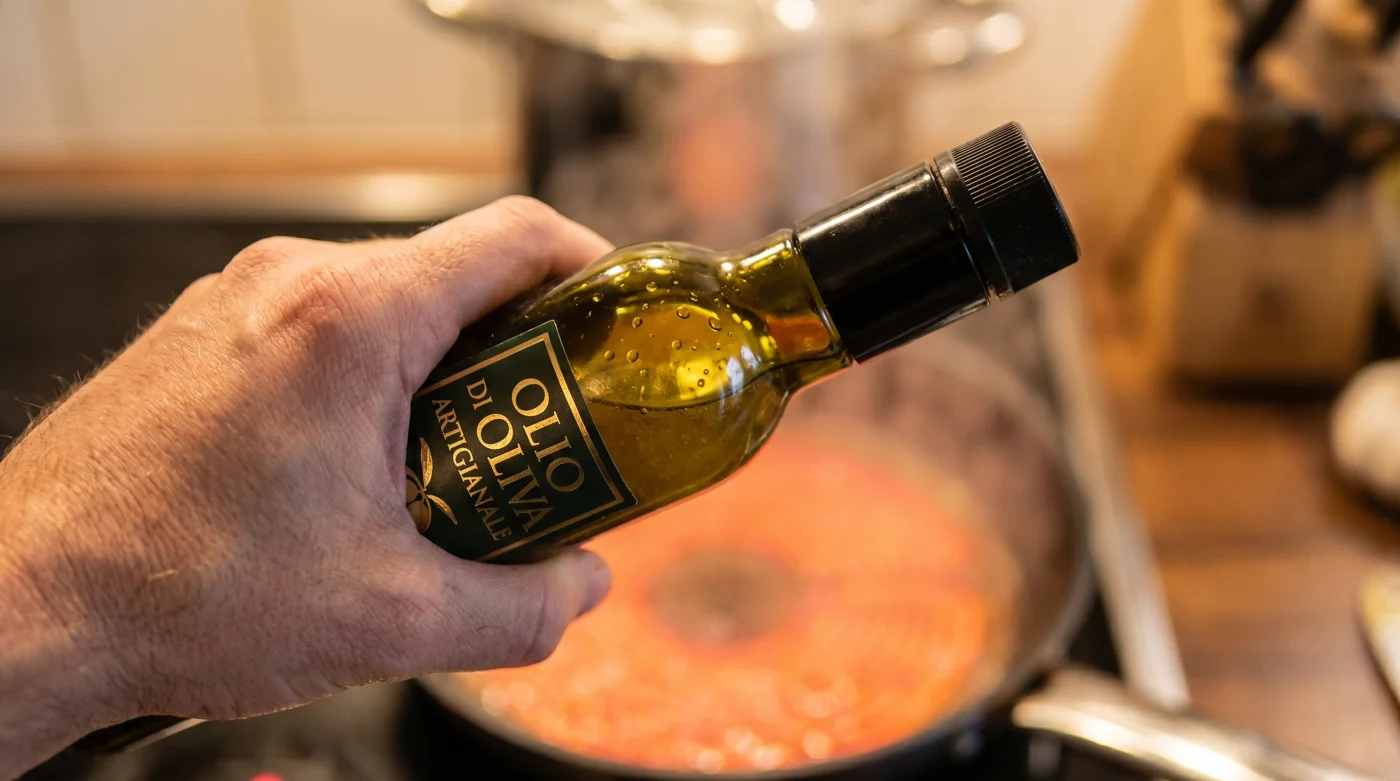
But this picture-perfect arrangement hides a silent, ongoing culinary disaster. Every single time you boil a pan of salted pasta water, sear a thick steak, or simmer a slow Sunday ragù, waves of invisible, radiant heat are baking that glass bottle. You might think you are merely keeping your most frequently used ingredient within easy arm’s reach. In reality, you are systematically destroying it.
Olive oil is not a robust, inert liquid like tap water or malt vinegar. It is, fundamentally, fresh fruit juice. By parking it next to a 200-degree heat source day after day, you drastically accelerate its natural degradation. You are actively turning a grassy, peppery perfection into a flat, heavy, and greasy liquid that tastes vaguely of old walnuts and damp cardboard.
The bitter irony is that we happily spend upwards of fifteen pounds on a single artisanal bottle, expecting a vibrant, grassy finish to our summer salads and toasted sourdough. Yet, by ignoring the thermal reality of our own cookers, we murder its delicate chemical profile within a mere fortnight. Convenience has completely blinded us to the basic, unforgiving chemistry of the kitchen.
The Perspective Shift: The Fruit Juice Fallacy
We tend to treat cooking oils like pantry hardware—indestructible liquids that sit alongside sea salt flakes and bags of dried penne without a second thought. But the moment you start viewing olive oil as a volatile, living ingredient, your entire kitchen geography shifts. Think of it less like a stable condiment and much more like a pint of fresh milk. You would never dream of leaving milk sitting next to a glowing radiator.
The radiant heat from your cooker easily penetrates the glass, warming the oil inside to temperatures it was never meant to endure outside of a frying pan. This constant thermal fluctuation—heating up while you cook, cooling down while you sleep—forces the oil to oxidize at an alarming, unnatural rate. In this hostile environment, oxidation is the ultimate enemy. It aggressively snaps the fragile polyphenols and volatile aromatics that give premium oil its distinct, throat-catching pepperiness. What you are ultimately left with is rancidity masquerading as convenience.
Consider the uncompromising approach of Marco Vianello, a 48-year-old executive chef running a celebrated Northern Italian kitchen in Mayfair. When new junior chefs join his brigade, their very first instinct is often to line up their oil bottles on the steel shelf directly above the stoves for easy access during a busy service. Marco instantly sweeps them away into a dark, climate-controlled prep pantry. ‘Olive oil breathes, ages, and dies,’ he tells them. ‘When you leave it by the fire, you force it to sprint towards its death.’ He insists on decanting only what is strictly needed for a single evening into small, opaque squeeze bottles, keeping the precious mother-lode entirely isolated from the kitchen’s chaotic thermal swings.
Deep Segmentation: Finding Your Perfect Placement
Not all kitchens are built the same, and neither is the specific way you consume your oil. Adapting this crucial rule requires a slight geographical reshuffle of your workspace, depending entirely on how you operate on a daily basis. The goal is to shield it from ambient heat without making your cooking routine feel cumbersome.
For the Daily Cook: If you are preparing meals from scratch every evening, you genuinely need speed and efficiency. Instead of keeping the main bottle by the open flames, designate a specific spot in a low floor cabinet. The simple physical act of bending down to retrieve it adds perhaps two seconds to your workflow, but it extends the vibrant, fresh life of your oil by several months.
For the Premium Collector: If you reserve a thirty-pound bottle of early-harvest Sicilian oil solely for drizzling over fresh burrata or finishing a steaming bowl of ribollita, you must treat it exactly like fine wine. Keep it safely in its original presentation box or tin. Store it in a cool, dark larder or even a dining room sideboard—anywhere that guarantees a stable, cool environment away from the hob and direct sunlight.
For the High-Volume Family Kitchen: When you buy in bulk, usually in three-litre aluminium tins to save household money, never keep that massive tin in the active kitchen space. Store the bulk vessel under the stairs or in a cool, draughty utility room. Instead, decant a week’s supply into a small, dark glass cruet. This drastically limits oxygen exposure for the main supply and completely prevents the risk of thermal shock.
Mindful Application: The Protective Protocol
Fixing this widespread issue requires nothing more than a minor habit change and a genuine, mindful respect for the ingredients you have invested your hard-earned money in. Moving your bottle away from the fire is the critical first step, but establishing a reliable, protective storage system ensures you always cook with oil that actually tastes like real olives.
Start by reassessing your immediate cooking zone today. Hold your bottle right now; if the glass feels even slightly warm to the touch when the hob is completely off, the ambient temperature of that spot is simply too high. Move it immediately to a significantly cooler zone.
To maintain absolute freshness, you must adapt your equipment. Light is the second great destroyer of oil. Always opt for dark green or brown glass when purchasing, and ensure the storage cupboard is completely opaque. Furthermore, oxygen acts alongside heat to ruin the oil. Ensure the cap or pourer is tightly sealed after every single use. Do not leave open pour-spouts entirely exposed to the kitchen air. This preserves the vital aromatic compounds for weeks on end.
- Ideal ambient storage temperature: Strictly between 14°C and 18°C.
- Maximum exposure window: Use any decanted oil within 7 to 10 days.
- Recommended Equipment: One 250ml ceramic or stainless steel cruet with a weighted, self-closing flap-pourer.
The Bigger Picture: Reclaiming Your Kitchen’s Geography
By shifting that single bottle just a few feet away from the cooker, you are doing much more than merely preserving a condiment. You are actively stepping away from the mindless, autopilot habits that heavily govern so much of modern home cooking. It gently forces a momentary, deliberate pause in your daily routine.
When you finally dress a simple plate of sliced heritage tomatoes, the oil will taste exactly the way the maker intended—vibrant, grassy, and fiercely alive. By respecting the silent chemistry of your raw ingredients, you effortlessly transform a mundane Tuesday night supper into something genuinely restorative. You stop fighting your ingredients and finally start working in complete harmony with them.
‘Treat your olive oil with the exact same reverence you afford a fine wine; shield it from the heat, hide it from the light, and it will reward your palate endlessly.’
| Key Point | Detail | Added Value for the Reader |
|---|---|---|
| Heat Degradation | Cooker proximity raises oil temp above 20°C daily. | Prevents your premium oil from tasting like stale walnuts. |
| Light Exposure | Clear glass bottles allow UV light to destroy antioxidants. | Maintains the health benefits and peppery kick. |
| Decanting Strategy | Using a 250ml daily cruet limits oxygen and heat shock. | Saves money by extending the lifespan of expensive bulk oils. |
The Olive Oil Storage FAQ
Does keeping oil in the fridge make it last longer?
While it preserves the oil, the fridge causes it to solidify and condense. Constant cycles of chilling and melting degrade the flavour. A cool, dark cupboard is vastly superior.Can I still cook with oil that has gone rancid?
You can, but you absolutely shouldn’t. Rancid oil won’t make you violently ill, but it will impart a heavy, greasy, and stale flavour to everything you cook, ruining your food.Are clear glass bottles always a bad sign?
Usually, yes. Beautiful clear glass shows off the colour, but it offers zero protection against UV light. If gifted one, keep it permanently boxed or in a dark cupboard.How long does extra virgin olive oil actually last?
Unopened in a cool larder, about 18 to 24 months from bottling. Once opened, you have roughly 30 to 60 days before the volatile aromatics begin to noticeably flatline.What is the best material for a daily oil dispenser?
Opaque ceramic or food-grade stainless steel. Both completely block out light and provide excellent insulation against minor ambient temperature shifts in the kitchen.