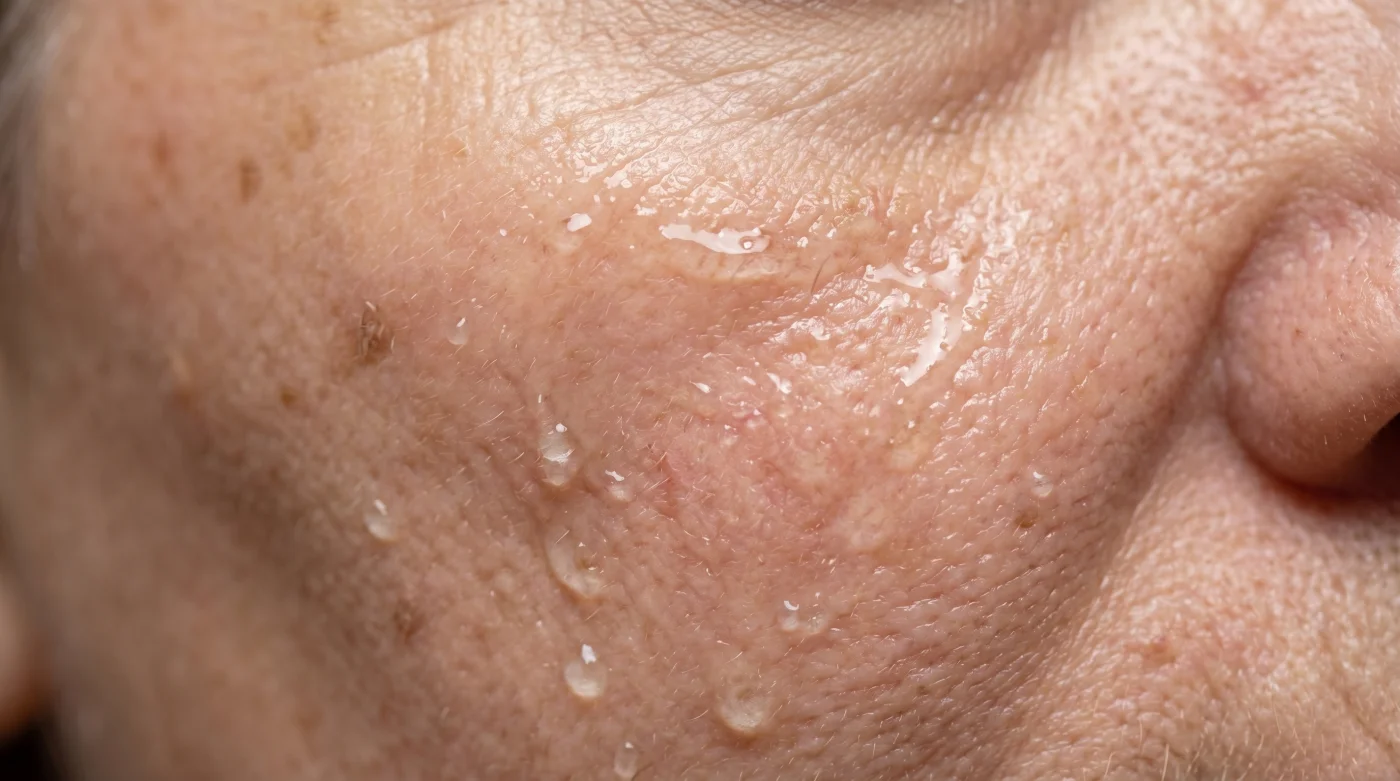
The click of the bathroom light switch signals the start of the evening ritual. You stand over the porcelain basin, clutching a tiny, amber glass bottle that costs more per millilitre than vintage champagne. For years, the instructions printed in microscopic font have been treated as gospel: cleanse thoroughly, then wait an agonising twenty minutes until your face feels entirely stripped and bone-dry.
Only then, according to conventional wisdom, are you permitted to apply your retinol serum. The logic always felt slightly punishing, a daily exercise in tight, uncomfortable endurance. You watch the yellowish liquid sit on the surface of your parched skin, hoping it sinks in before you rest your cheek against the cotton pillowcase.
But behind the closed doors of high-end clinical practices, a quiet rebellion has been taking place. Women who have spent decades studying cellular turnover are deliberately breaking the cardinal rule of vitamin A application. They aren’t waiting for that desert-like finish. Instead, they are catching their skin in a fleeting, fragile state of dampness.
The Sponge Mechanism
The secret lies in a concept that contradicts every pamphlet handed out at the beauty counter. We are taught that water accelerates retinol absorption so aggressively that it guarantees a morning of red, peeling misery. The industry standard insists on dry application simply as a foolproof safety net for beginners.
Yet, if you visualise a dry sponge resting on your kitchen counter, you understand the flaw. Place a single drop of concentrated washing-up liquid onto that brittle, crusty surface. It sits there, stubbornly pooled, refusing to penetrate. Now, wring out a damp sponge and try again. The moisture acts as a conduit, pulling the liquid instantly into the porous centre. Your epidermis behaves in exactly the same way.
When you apply a retinol serum to a face that retains a micro-layer of hyaluronic acid moisture, you aren’t diluting the active. You are creating a slip-stream. The water binds to the hydrating molecules, pulling the vitamin A past the rigid upper stratum corneum and depositing it precisely where needed.
Dr. Helena Sterling, a 58-year-old consultant dermatologist operating just off Marylebone High Street, often watches her new patients meticulously describe their dry-skin routines. She usually stops them mid-sentence. ‘The dry-skin rule is a handbrake,’ she explains, adjusting her reading glasses. ‘We tell the general public to apply it dry so they don’t burn themselves with overuse. But for my private clients, I teach them to harness a damp face. It forces the active ingredient deeper, meaning you need half the product for double the cellular response. It is the prohibited shortcut we use ourselves.’
Calibration for Your Skin Type
Understanding this technique requires adjusting it to your specific threshold. The goal is a dewy surface, not a dripping wet canvas. How you approach this moisture bridge depends entirely on your current relationship with active ingredients.
For the Cautious Novice: If your cheeks naturally flush at the mere mention of active skincare, you must construct a buffer. Cleanse your face, lightly pat away the excess water with a soft flannel, and press a hydrating hyaluronic acid toner into the skin. Wait precisely thirty seconds until the surface feels tacky, like the back of a postage stamp. Apply your serum now, letting the toner drag the retinol down gently.
For the Seasoned User: You have been using strong retinoids for years and your skin rarely flakes. You can skip the intermediate toner. Simply wash your face, lightly press a towel against your chin and forehead once, and apply the active directly to the residual water. The dampness will instantly drive the formula into the deeper dermal layers, bypassing superficial friction entirely.
For the Menopausal Shift: As oestrogen drops, the skin loses its ability to hold onto its own water weight. You might find that products you tolerated in your forties suddenly sting. Here, the damp-skin trick is transformative. By locking a ceramide-rich mist under the retinol, you are feeding the lipid barrier while simultaneously stimulating collagen, turning a harsh treatment into a plumping overnight therapy.
The Three-Minute Evening Protocol
Executing this shift in your routine requires paying attention to the texture of your face, rather than staring at a clock. The old habit of wandering around the bedroom waiting for your skin to dry out is an entirely obsolete waiting game. You are now working with a narrow, highly effective window of opportunity.
- Cleanse your face with a non-foaming cream wash to avoid stripping natural oils.
- Press a clean towel gently against your face just once to catch running droplets.
- Mist the face lightly with a basic water or hyaluronic spray to build the moisture bridge.
- Dispense a single pea-sized amount of retinol onto your ring finger.
- Tap the product rapidly over your forehead, cheeks, and chin before immediately sealing with a heavy moisturiser.
Your tactical toolkit for this method is minimal. Keep your bathroom environment steamy, ensure your hands are warm before touching your face, and strictly limit the active serum to the size of a single garden pea. More is not better; deeper is better.
Beyond the Bathroom Mirror
When you stop treating your evening routine as a list of rigid, unforgiving rules, something shifts. You realise that standard advice is often designed for the lowest common denominator, a safety net for the masses meant to prevent widespread irritation. But you are capable of paying attention to the nuances of your own biology.
Mastering this simple shortcut does more than just stretch a forty-pound bottle of serum across six months instead of three. It restores your intuition. You begin to notice the subtle difference between skin that is irritated and skin that is working hard. You learn to read the texture of your own face, adjusting the moisture levels depending on the weather outside or the heating inside.
Reclaiming the damp-skin method is a quiet act of trusting yourself. It turns a chore that used to require twenty minutes of clock-watching into a fluid, two-minute evening ritual. You step away from the mirror not with a tight, parched face, but with skin that feels deeply fed, silently repairing itself while you sleep.
‘The skin is not a wall to be breached, but a membrane to be negotiated with; moisture is the diplomatic envoy that carries your active ingredients safely across the border.’ – Dr. Helena Sterling
| Key Point | Detail | Added Value for the Reader |
|---|---|---|
| Standard Dry Application | Wait 20 minutes post-cleanse before applying retinol to bone-dry skin. | Prevents severe beginner irritation but wastes product on the surface and wastes your evening time. |
| The Prohibited Damp Method | Apply retinol to skin that retains a micro-layer of hyaluronic moisture. | Pulls the vitamin A deeper into the epidermis, halving product usage and accelerating overnight cellular turnover. |
| The Lipid Seal | Immediately trapping the active under a heavy ceramide cream. | Stops trans-epidermal water loss, preventing the peeling commonly associated with retinoids. |
Frequently Asked Questions
Will applying retinol to damp skin cause chemical burns? No. While water does increase penetration, controlling the amount of moisture and the amount of serum ensures a deeper, not harsher, result. Start with a tacky surface, not a dripping wet face.
Do I still need a moisturiser afterwards? Absolutely. The damp-skin method relies on sealing the active ingredient beneath a heavy lipid barrier to prevent evaporation and soothe the epidermis.
Can I use this trick with prescription retinoids? Yes, but with caution. Prescription strengths are already highly penetrative. Buffer the skin with a hyaluronic toner first rather than applying directly to tap water dampness.
How do I know if my skin is too wet? Your face should feel cool and slightly tacky, like the back of a postage stamp. If water is pooling in your collarbone, you need to press a towel to your face once more.
Will this save me money on skincare? Yes. Because the moisture creates a slip-stream, a single pea-sized amount will spread effortlessly across your entire face and neck, doubling the lifespan of your serum.